Visit our Health & Safety Alerts page to see the latest alert! Print it off and post it on your safety bulletin boards! Review it as a group at your next safety meeting!
News
Image

The November issue of the the Comfort Zone, the all Canadian Health, Wellness & Safety Newsletter, is here.
Highlights in this issue:
- Dress for the chilly weather
- Avoid chicken pox and shingles
- Bust winter driving myths
- Pet care during winter
- Workplace concussions
- Contact lens safety
- Reduce holiday sress
- Help smokers quit with support
- Tips to beat needlephobia
- Kids and earaches
- How to wash your hands properly - meeting guide
Image
-
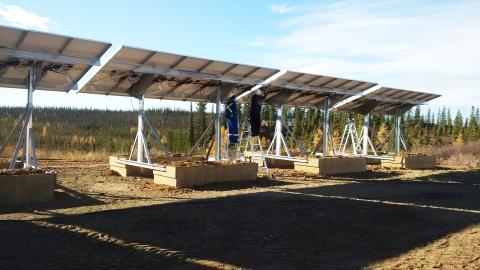
Solar Photovoltaic generation is an intermittent energy source with outputs that vary dramatically on a minute by minute basis and can be disruptive to the electrical system if not managed appropriately.
-
Solar PV generation output on a sunny day can vary from 100%, while the sun is in clear view of the solar panels, down to minimal levels with the passing over of each and every cloud.
-
This variance in output must be compensated for by NTPC’s other electrical systems and generally that’s the diesels that normally supply the community.
-
The capability of diesels to absorb rapid load changes caused by the solar output variance is 20% without putting the community’s reliability in jeopardy and potentially causing surges, brown outs and even complete power outages.
-
On the basis of the diesel’s limitations NTPC has posted the allowable solar capacity that can be installed in each community of the NWT. These levels correspond with 20% of the community’s average load.
-
The 20% is made up of NTPC solar generation plus any customer owned solar generation.
-
In order to reliably allow penetration levels above 20%, such as in the case of the Colville Lake pilot project where solar penetration levels are in excess of 100%, batteries and a sophisticated load control system must be installed at NTPC’s power plant.
-
These batteries and control system in the case of Colville Lake cost $1.5M which was covered by the GNWT as the existing rates from 70 customers in the community alone would not cover such a large expenditure without seeing significant rate increases.
-
There is a requirement to subsidize 50% of solar projects at the low penetration levels to avoid any rate increases to customers with the fuel savings offsetting about half of the solar capital and ongoing maintenance costs.
-
NTPC, in accordance with the GNWT’s Energy Plan, contemplates first achieving 20% in all thermal communities before any further high penetration systems are implemented.
-
The economics of the first 20% is significantly better for customers and the GNWT. Any solar beyond the 20% level would have to be fully subsidized to allow the installation of the battery and control systems.
You can check out much power is produced by NTPC's solar arrays in Colville Lake, Fort Simpson and our newest additions in Fort Liard and Wrigley, at the links below:
On Wednesday, our Minister, Louis Sebert, the Board Chairman, Paul Guy, Emanuel and our manager of regulatory affairs, Cory Strang presented to the government's Standing Committee on Priorities and Planning or SCOPP about the numbers that are floating around in the media, stating the NTPC is over-charging Yellowknifers for power.
Click here for the presentation, however it's important to know a few things before you read it:
1) When a number is "calculated" it means that it was calculated but not approved or used for rate-setting. (Pages 8 & 11)
2) For the years 2016-2019 numbers are "proposed" which means they are preliminary estimates and not submitted or approved yet. (Pages 8 & 11)
If you have any questions after watching the presentation or would like further information or explanation, please contact Cory at x5217 in Hay River.
Are you sitting at your desk wondering
what's happening in other divisions?
Well, wonder no longer! Directors are providing quarterly updates available on their divisional pages.
Check out the updates from:
...and then watch here for further updates.