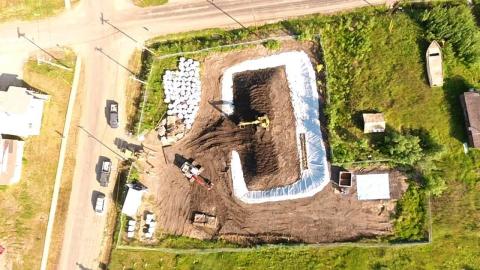
Traditional landfarming of hydrocarbon impacted soil involves spreading out the soil and mixing it. Landfarming allows naturally occurring bacteria to feed on the hydrocarbons and break them down into carbon dioxide and water. This reduces and eventually eliminates the hydrocarbon impacts. The remediation process can take several seasons, depending on levels of contamination, temperature, and growing season. However, the naturally occurring bacteria has a hard time breaking down heavier fuel products, like at the Aklavik former plant site, and landfarming is not a viable option.
With the Aklavik former plant site remediation project, NTPC is therefore testing a fairly new methodology. It has proven successful in northern Alberta but has not yet been used in the NWT. It is like a landfarm, but with the introduction of additional hydrocarbon-eating bacteria and surfactants. The special strains of bacteria aggressively break down the hydrocarbons, while the surfactants make difficult pockets of contamination more accessible.
Results from the first season of treatment show a moderate decrease in impacts; however it is too early to tell how effective this remediation technology will be. If it proves successful, it could be a means to swift and cost effective remediation of contaminated sites around the north.